Women and the Transnational Cleavage: Closing the Internationalism Gap?
Nina Obermeier
King’s College London
King’s College London
Traditional Gender Gap in Internationalism
- International trade (Guisinger 2009; Mansfield and Mutz 2009; Mayda and Rodrik 2005; Scheve and Slaughter 2001)
European integration (Gabel 1998; Liebert 1999; Nelsen and Guth 2000)
(Some types of) immigration (O’Rourke and Sinnott 2006; Ponce 2017)
Traditional Gender Gap in Internationalism
International trade (Guisinger 2009; Mansfield and Mutz 2009; Mayda and Rodrik 2005; Scheve and Slaughter 2001)
European integration (Gabel 1998; Liebert 1999; Nelsen and Guth 2000)
(Some types of) immigration (O’Rourke and Sinnott 2006; Ponce 2017)
Traditional Gender Gap in Internationalism
International trade (Guisinger 2009; Mansfield and Mutz 2009; Mayda and Rodrik 2005; Scheve and Slaughter 2001)
European integration (Gabel 1998; Liebert 1999; Nelsen and Guth 2000)
(Some types of) immigration (O’Rourke and Sinnott 2006; Ponce 2017)
Traditional Gender Gap in Internationalism
International trade (Guisinger 2009; Mansfield and Mutz 2009; Mayda and Rodrik 2005; Scheve and Slaughter 2001)
European integration (Gabel 1998; Liebert 1999; Nelsen and Guth 2000)
(Some types of) immigration (O’Rourke and Sinnott 2006; Ponce 2017)
Gender Gap in Western Europe Over Time
Support for European integration
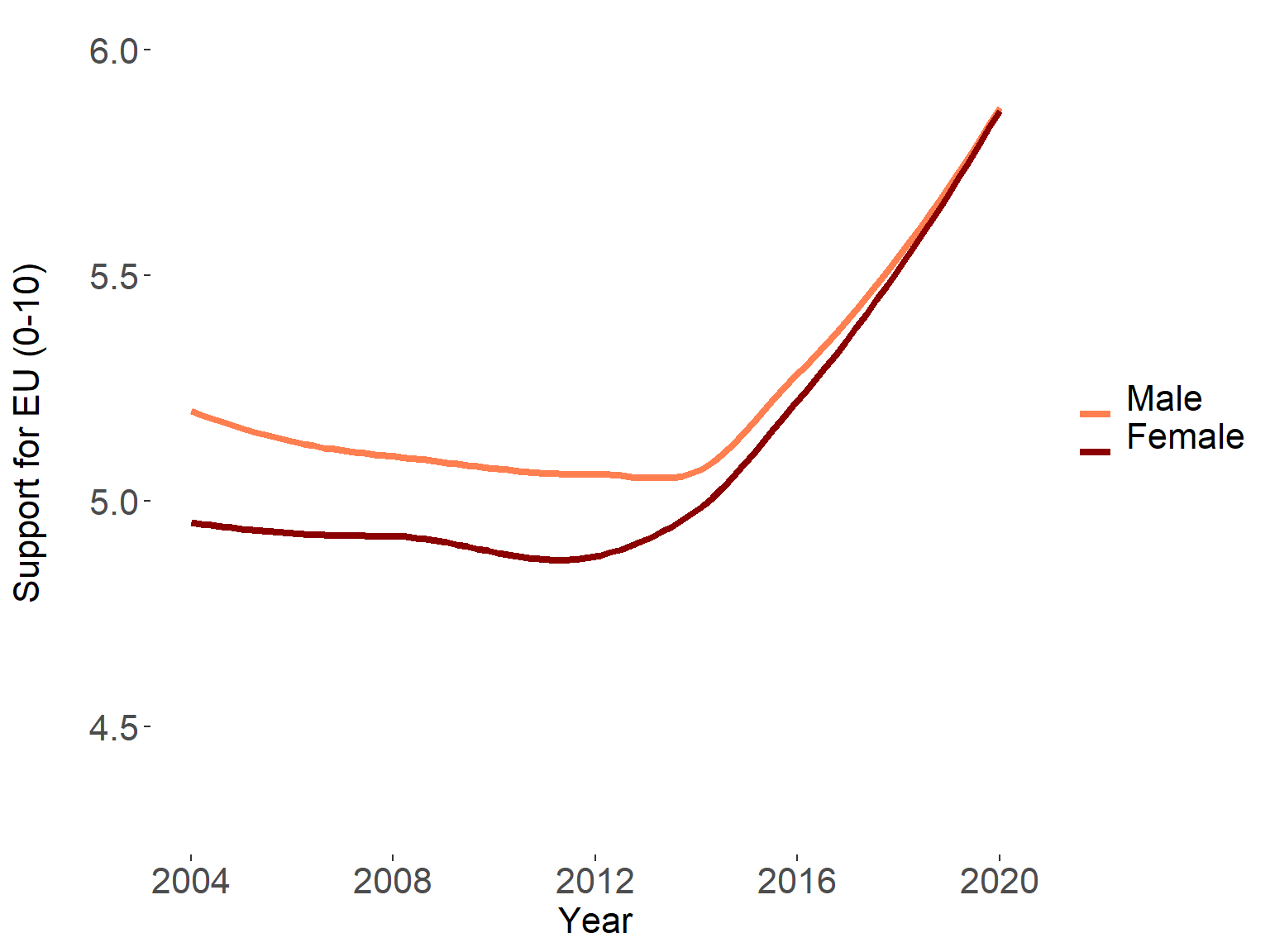
Gender Gap in Western Europe Over Time
Support for immigration
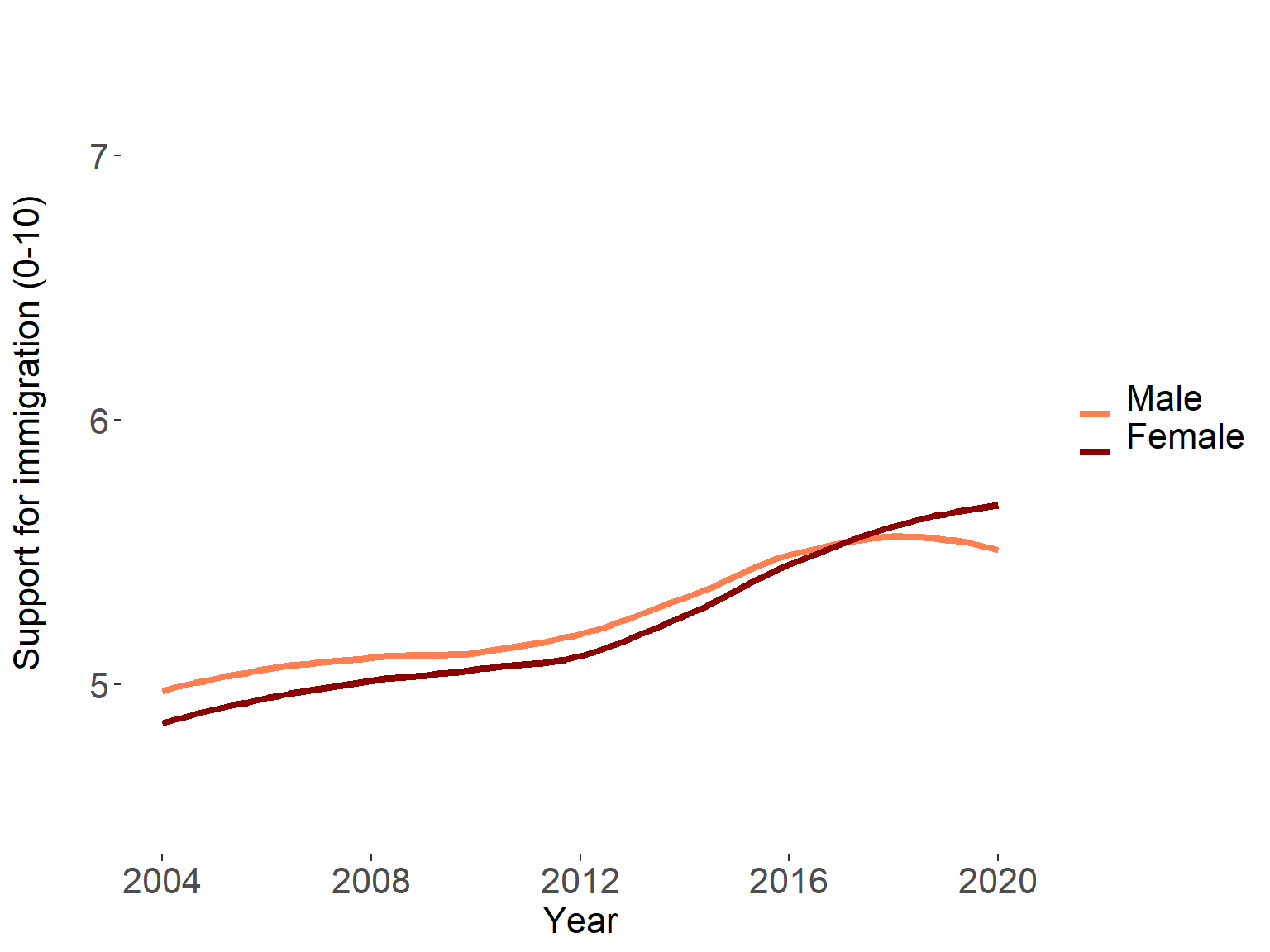
Gender Gap in Western Europe Over Time
Support for globalization
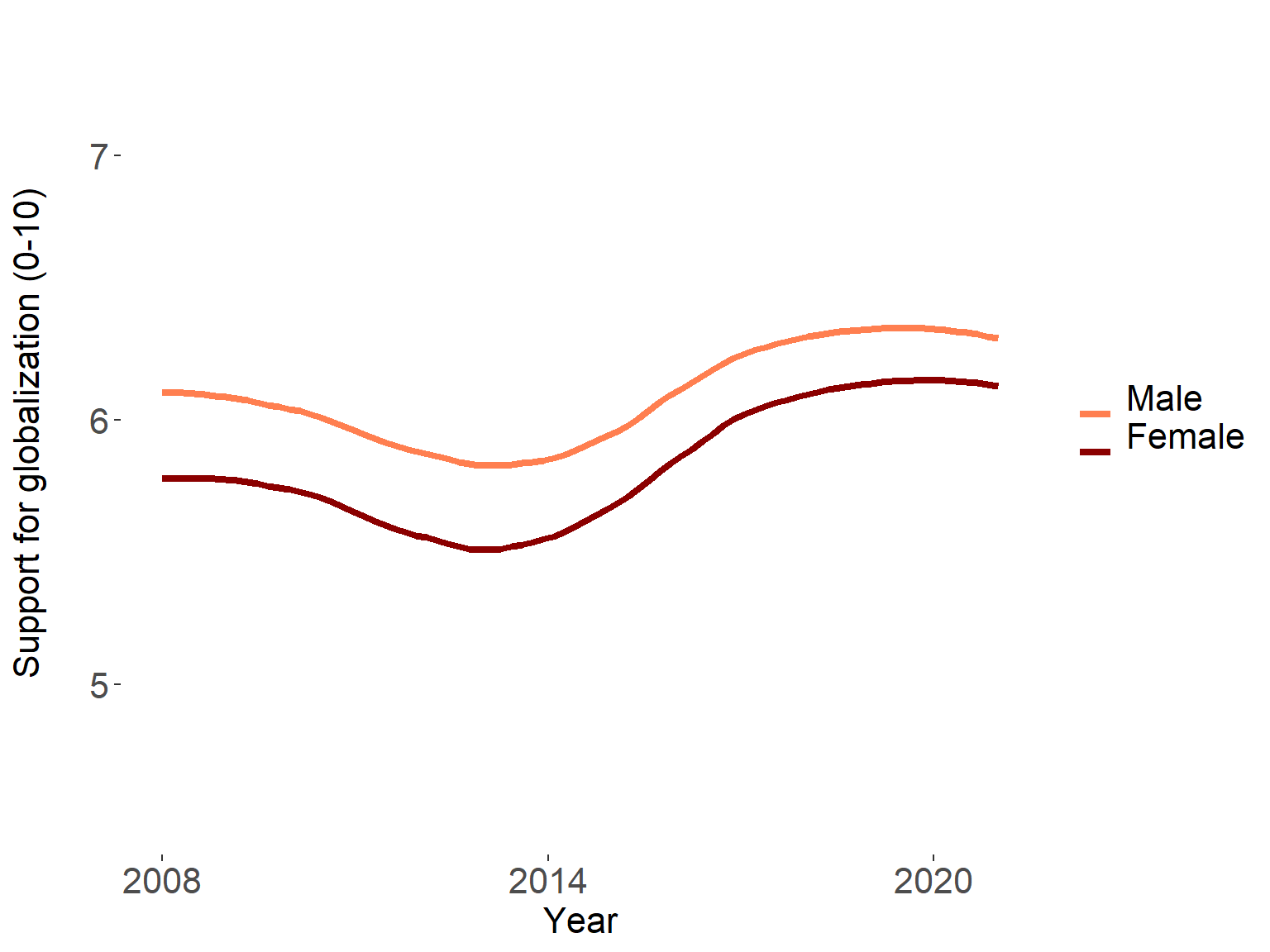
Gender Gap in Western Europe Over Time
Support for free trade
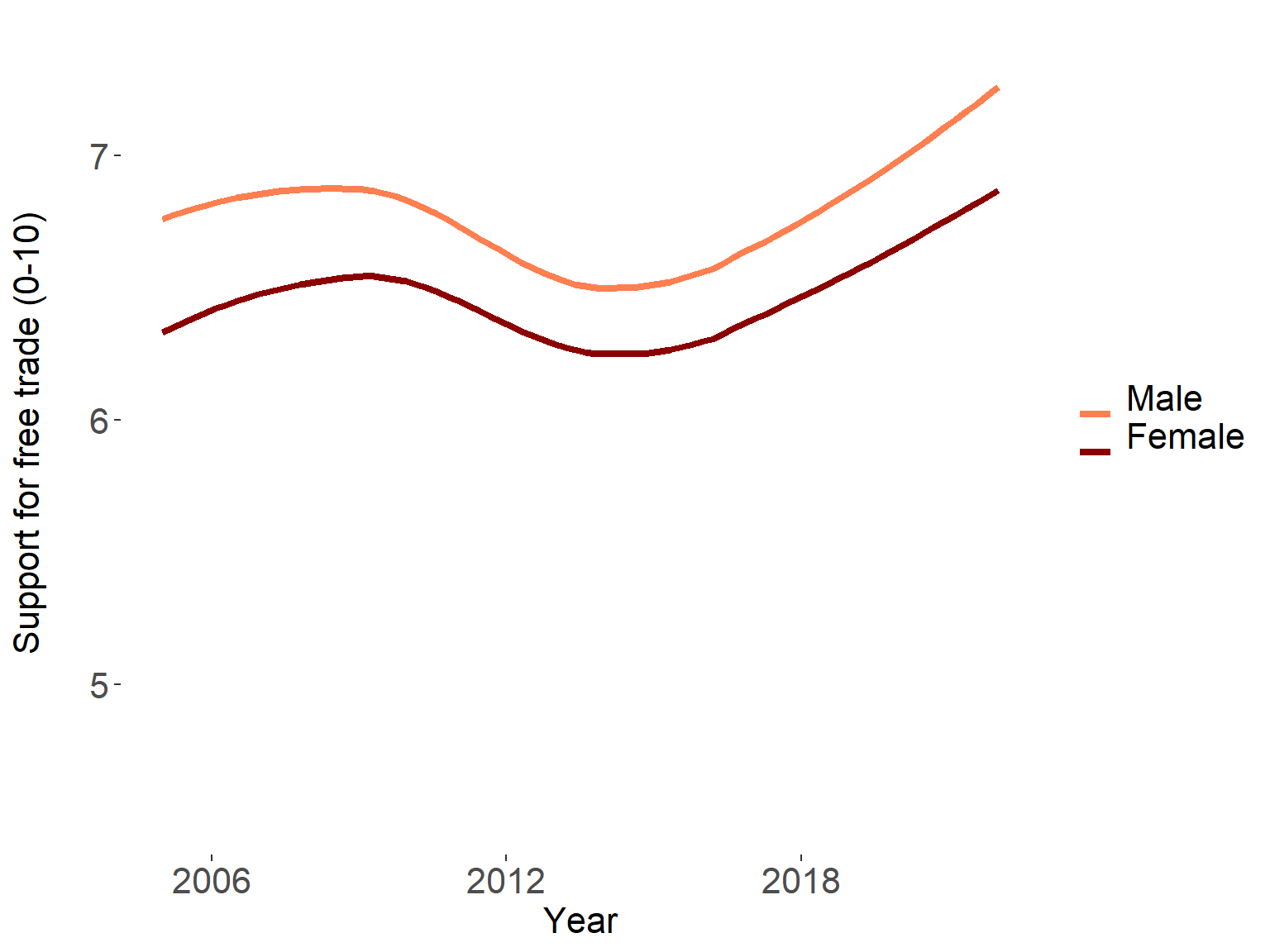
Existing Explanations for Gender Gap
- International trade: concern about economic volatility (Guisinger 2017); trade as competition (Mutz 2021)
EU: Lack of knowledge (Nelsen and Guth 2000); responsiveness to gender mainstreaming (De Vries 2018)
Immigration: Threat to gender equality (Ponce 2017)
Existing Explanations for Gender Gap
International trade: concern about economic volatility (Guisinger 2017); trade as competition (Mutz 2021)
EU: Lack of knowledge (Nelsen and Guth 2000); responsiveness to gender mainstreaming (De Vries 2018)
Immigration: Threat to gender equality (Ponce 2017)
Existing Explanations for Gender Gap
International trade: concern about economic volatility (Guisinger 2017); trade as competition (Mutz 2021)
EU: Lack of knowledge (Nelsen and Guth 2000); responsiveness to gender mainstreaming (De Vries 2018)
Immigration: Threat to gender equality (Ponce 2017)
Existing Explanations for Gender Gap
International trade: concern about economic volatility (Guisinger 2017); trade as competition (Mutz 2021)
EU: Lack of knowledge (Nelsen and Guth 2000); responsiveness to gender mainstreaming (De Vries 2018)
Immigration: Threat to gender equality (Ponce 2017)
Argument
Narrowing of gender gap due to increased linking of anti-internationalism to right-wing extremism as transnational cleavage arises and populist radical right becomes more prominent
Argument
Linking of anti-internationalism to right-wing extremism in public discourse
🡻
Increased internationalism among people who reject right-wing extremism
Argument
Linking of anti-internationalism to right-wing extremism in public discourse
🡻
Increased internationalism among people who reject right-wing extremism
Argument
Higher sensitivity to social norms and discomfort with political extremism among women (Harteveld and Ivarsflaten 2016; Harteveld et al. 2017; Mayer 1999; Oshri et al. 2022)
+
Change in public discourse around anti-internationalism
🡻
Internationalism increases more strongly among women than men
Argument
Higher sensitivity to social norms and discomfort with political extremism among women (Harteveld and Ivarsflaten 2016; Harteveld et al. 2017; Mayer 1999; Oshri et al. 2022)
+
Change in public discourse around anti-internationalism
🡻
Internationalism increases more strongly among women than men
Argument
Higher sensitivity to social norms and discomfort with political extremism among women (Harteveld and Ivarsflaten 2016; Harteveld et al. 2017; Mayer 1999; Oshri et al. 2022)
+
Change in public discourse around anti-internationalism
🡻
Internationalism increases more strongly among women than men
Hypotheses
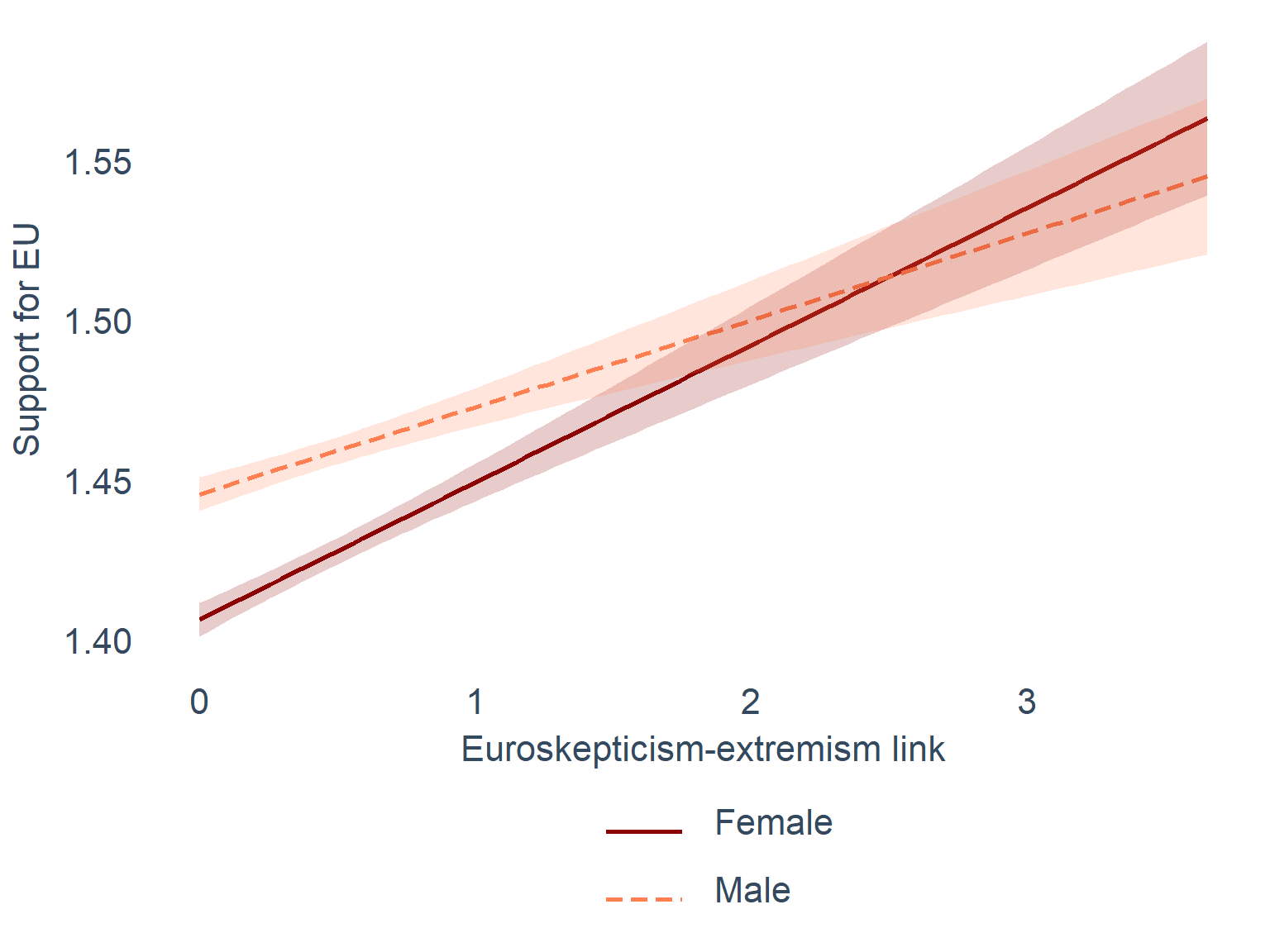
H1: The effect of closer links between anti-internationalism and right-wing extremism in public discourse on support for international economic integration will be stronger among women than among men.
H2: The moderating effect of gender on the relationship between changes in public discourse and support for internationalism will be stronger in countries where PRR parties are the primary political actors promoting anti-internationalism.
Hypotheses
H1: The effect of closer links between anti-internationalism and right-wing extremism in public discourse on support for international economic integration will be stronger among women than among men.
H2: The moderating effect of gender on the relationship between changes in public discourse and support for internationalism will be stronger in countries where PRR parties are the primary political actors promoting anti-internationalism.
Resesarch Design
Measure of link between Euroskepticism and right-wing extremism in media discourse in 8 Western European countries (Austria, France, Germany, Ireland, Italy, the Netherlands, Spain, UK) from 2000 to 2019 (Obermeier 2021)
Merged with Eurobarometer survey data
Individual level + country year level control variables
Resesarch Design
Measure of link between Euroskepticism and right-wing extremism in media discourse in 8 Western European countries (Austria, France, Germany, Ireland, Italy, the Netherlands, Spain, UK) from 2000 to 2019 (Obermeier 2021)
Merged with Eurobarometer survey data
Individual level + country year level control variables
Resesarch Design
Measure of link between Euroskepticism and right-wing extremism in media discourse in 8 Western European countries (Austria, France, Germany, Ireland, Italy, the Netherlands, Spain, UK) from 2000 to 2019 (Obermeier 2021)
Merged with Eurobarometer survey data
Individual level + country year level control variables
Results
Relationship between discourse and support for EU by gender
Evidence for Mechanism
- Posited mechanism: sensitivity to social norms
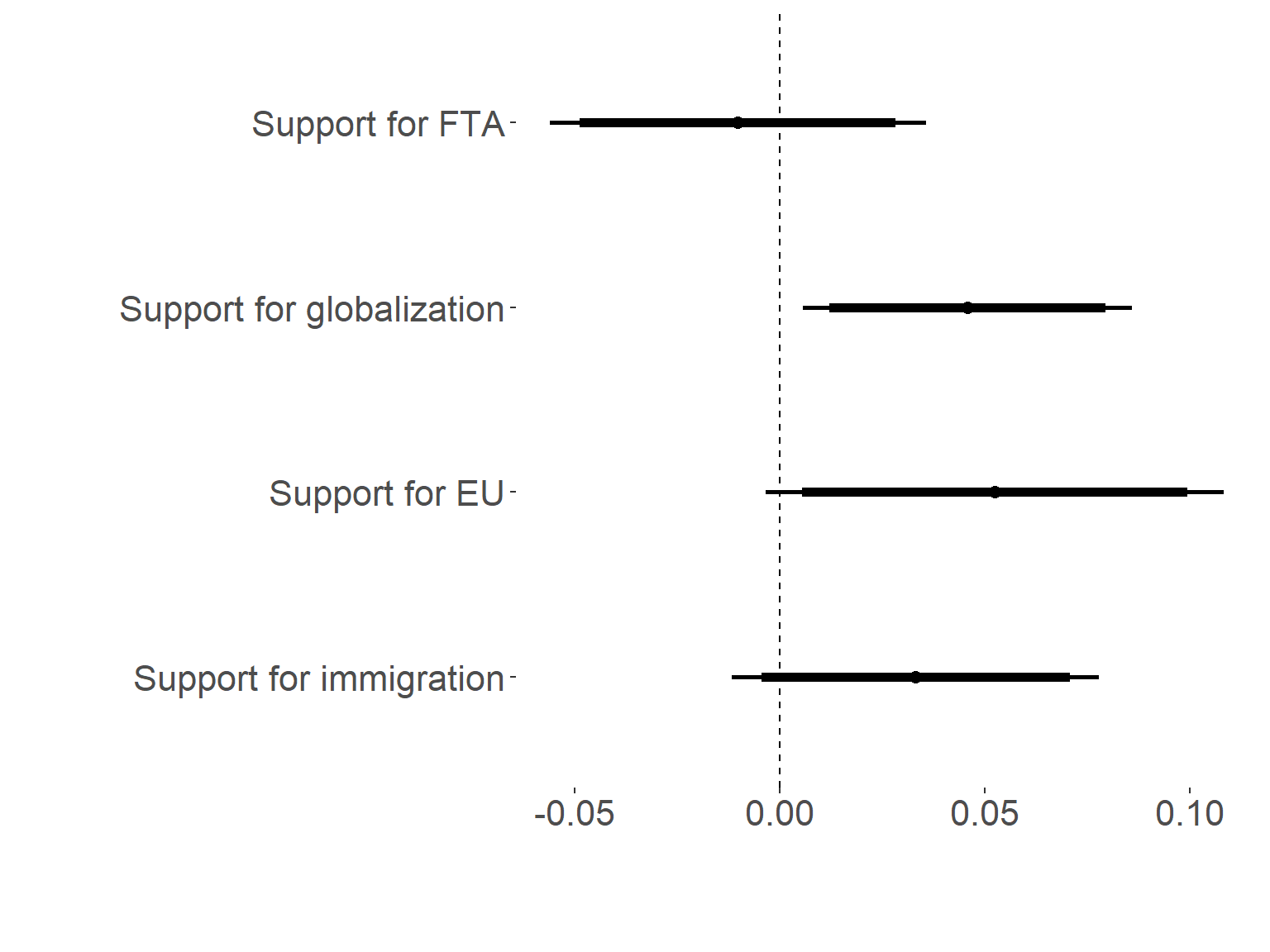
Survey experiment with 1,770 respondents in France in August 2023
Treatment: exposure to information about strength of social norm against racism
Evidence for Mechanism
Posited mechanism: sensitivity to social norms
Survey experiment with 1,770 respondents in France in August 2023
Treatment: exposure to information about strength of social norm against racism
Evidence for Mechanism
Posited mechanism: sensitivity to social norms
Survey experiment with 1,770 respondents in France in August 2023
Treatment: exposure to information about strength of social norm against racism
Evidence for Mechanism
Posited mechanism: sensitivity to social norms
Survey experiment with 1,770 respondents in France in August 2023
Treatment: exposure to information about strength of social norm against racism
Evidence for Mechanism
Effect of social norms treatment on internationalism
Conclusion
Gender gap in support for international integration narrowing in Western Europe
Driven by closer linking of anti-internationalism with extremism
Importance of (changing) relationship between gender and the populist radical right
Conclusion
Gender gap in support for international integration narrowing in Western Europe
Driven by closer linking of anti-internationalism with extremism
Importance of (changing) relationship between gender and the populist radical right
Conclusion
Gender gap in support for international integration narrowing in Western Europe
Driven by closer linking of anti-internationalism with extremism
Importance of (changing) relationship between gender and the populist radical right
Thank you!
nina.obermeier@kcl.ac.uk